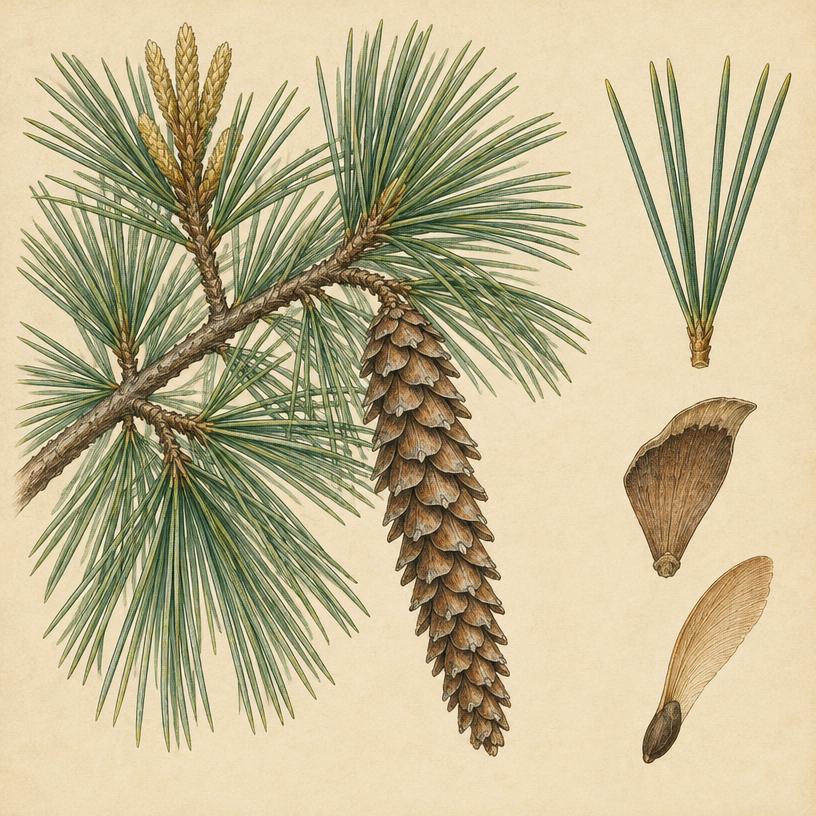
Pine needles
Pinus strobus / P. sylvestris / P. edulis
Harvest: Needles
Conifer woods (pinyon in the Southwest; white, lodgepole and ponderosa pine in the Pacific Northwest)
Season: Jan, Feb, Nov, Dec
Found in: Northeast US & Eastern Canada · Southeast US · Midwest US & Prairie Provinces · Southwest US · Pacific Northwest & British Columbia · West Coast & California
History, medicine, folklore & nutrition
Many Indigenous peoples of North America made tea from conifer needles in winter. Pinyon pines in the Southwest also gave pine nuts, a major food for Indigenous peoples for thousands of years.
Evergreens were brought indoors at midwinter across Europe as a sign that life would return — the roots of the Christmas tree.
Used as medicine in the past for
- Preventing scurvy — Native peoples shared pine tea with sick explorers
- Coughs and colds, as tea or steam
Read the research
These plants were used as medicine in the past. This is shared to help you learn — it is not medical advice. Some plants can hurt you or mix badly with medicines. Always talk to a doctor before using any plant as medicine, especially if you are pregnant, a child, or take other medicines.
Sources: USDA PLANTS Database
Historical and folk uses are shared for learning, not as medical advice.
How it's used
Lookalikes — compare before picking
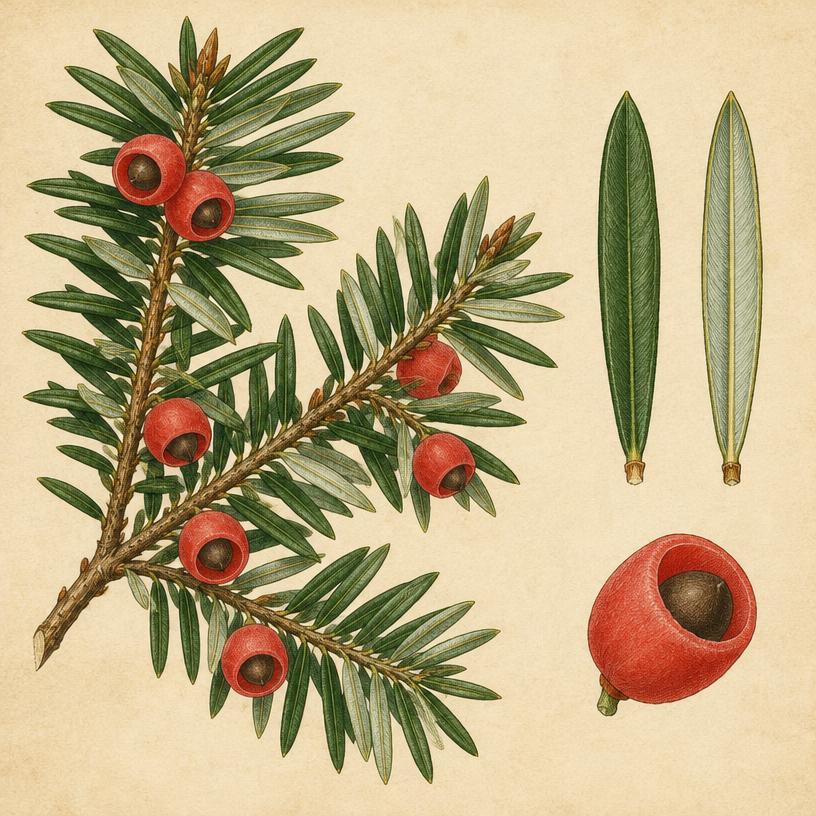
Yew is deadly and looks similar — learn the difference. Avoid ponderosa pine in pregnancy.